
My Writing Journey: Internal Plot
Three tips to make your stories more character driven.

Whoops, my last writing journey title is completely off! I totally switched topics and it makes no sense. Substack flop. Well, I’ll endeavor to do better this time.
My last writing journey post detailed the familiar external plot (not 2 plots, like the title suggests😯). You know, the expected structure of many books you read. But there’s a second plot, the internal plot. And yet, as a critique partner and beta reader, many manuscripts I’ve read fall short on how the main character needs to be transformed by the external plot.
And if you’re a querying writer, I guarantee you agents can spot a non-existent internal plot from your blurb, and in this age of character-driven stories, that might be where the spark is missing.
It’s also something I needed to learn, and what I focused on for the third draft of Under the Bright Sun—my middle grade novel in a dystopian fantasy setting about a girl that finds her voice and fights for change both for herself and her village.
So! What is the internal plot and how do you develop it?
The internal plot is your character’s arc throughout the story. It’s why the character does what they do and the choices they make. It’s how they react to the external plot which is always there forcing change. And, hopefully, they change to become a better person. (If your character is a hero.)
Developing Internal Plot
A story begins with a character, in a setting, with a problem. Let’s take a closer look at that problem. This will help you start your character’s internal arc.
Desire and Fear

Your character wants something. They have a deep desire they want to achieve in their life. But they don’t have it yet. And they don’t have it because a deep fear is standing in their way. This leaves the character in a zone of stasis. This is where they start in the story before the plot wagon comes along to whisk them away. And these are important to put on the page as early as you can.
It’s the push and pull of desire and fear that makes your character relatable.
We all have something we desire and we have fears about the process, sometimes ones we don’t really know are there. My writing came to an abrupt halt and was non-existent for years because I was afraid of what I needed to do to make it better and to put it out into the world. I’m older now (and arguably wiser) with a stroke of determination that propels me forward. (Yeah, we’ll say forward, because I haven’t achieved my dreams of having a published novel yet, and that hill keeps getting steeper, but I’m still here seeking out and trying new tools to help me reach the top.) Do I still have fears? Yes! And your characters will shift goals and change their fears and desires as the external plot forces them to. But, readers need a clear picture of what desires the character has and what fears they have about this goal before we see their world torn asunder.
Goals, Motivation, and Conflict (GMC)

Even if everything shifts after the inciting incident, it’s important to establish your character’s goals, motivation, and conflict as early as possible in your novel. Why? Because these three things help establish your character’s problem and why it’s important to them.
While you need to know the desire and fear and you might trickle them onto the early pages, you need to make the goals, motivation, and conflict explicit for your reader as soon as possible.
Your character’s desire ties into their goals. What do they want? Why do they want it? What do they think achieving these goals will say about them?
There’s going to be conflict with getting these goals, perhaps something internal like guilt, or external like competition. Who or what is standing in the way of their goals? What will they think they have to do to be successful?
And then there’s the motivation. What is driving that character toward their goals? Why do they want what they want? And how do their fears influence the choices they make toward those goals? What will it mean to them if they succeed? What will happen if they fail?
Remember, all of this is Act 1 stasis mode. Before you have your inciting incident, laying these out will establish what kind of person your character is for your readers so they know who they are taking this journey with. After your inciting incident, the GMC might change, shifting to align with new situations.
If you’ve queried before and you recognize some of these questions, that’s because they look a lot like the questions you answer in your query blurb. A good blurb goes with good first pages and knowing what drives your character and what they expect to face are part of writing good first pages.
Expectations

Here’s a little trick that will easily level up your character-driven story. What do they expect to happen? How does it compare to their life and what they know? How can you establish a sense of safety and then tear it away by having the unexpected happen?
Showing readers that your character expects a certain solution to their problem establishes what your character thinks and feels, helping readers relate to your character. It also helps readers keep track of what’s happening in the story, to check in on the character’s progress. This is a tip you can employ at the scene-level to keep readers following your characters through all the pages.
From Development to Arc
Now that you’ve established your character’s baseline desires and fears, goals, motivations, expectations, and conflicts, the next step is to stop at each of the major plot beats and consider how your character will react to what they experience. And at some point (right at about the 75% mark, or the All is Lost beat of Save the Cat), what the character fears most, or something else they didn’t realize they feared even more will stop them in their tracks and force them to take a look at those fears and desires, those wants and motivations, and force them to change. The external plot and internal plot go hand in hand to make your character to take a deep look at those fears and realize what they want is closer than they ever thought possible before. Somewhere along the way, the transformation to reaching it (or, let’s face it, letting it go) became a lot easier now that they’ve faced what they feared most. So, follow along with your external structure and make give them some opportunities to reflect.
These tips were curated from my experience participating in the annual RevPit competition (2023-2026) and from the craft book Story Genius.
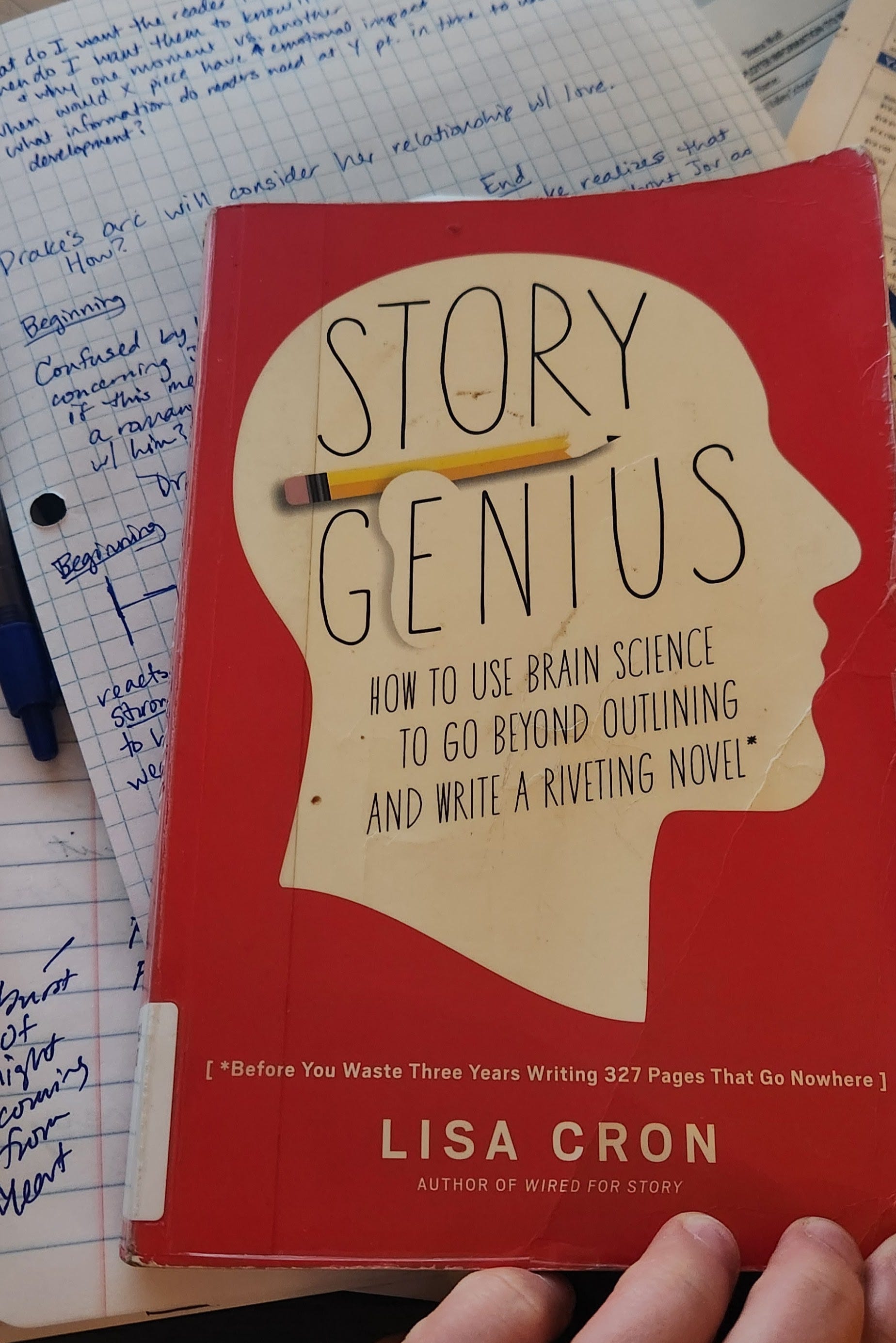
After working out an internal plot or character arc for my main character, I found my next step was figuring out how to add more interiority. Stay tuned for my next writing adventure!
I like fear and desire vs. need and misbelief! Both have use, and so knowing both is sort of like looking at the same arc from a different angle.