
Early Writing Advice that Worked for Me
How I finished my first novel and won my first novel writing month challenge

When I started NaNoWriMo, I was high on motivation. I was riding on the wave of rewriting part of the story I had once abandoned, making it better. And the new material came freely. The word count graphs were really motivating to me, and helped me get more than the daily par for the first several days of the competition. But I wasn’t sure they would be motivating enough. After all, I was working on a story that I had abandoned for a decade. So, I joined the forums a few days after the month began, and started poking around trying to find advice that would carry me through the month when the going got tough.
When I began my decade-long writing hiatus, I had reached a place where I questioned my expertise. I had never been in a similar situation to the characters I was writing about. I was unsure of myself. I was unsure of how the story was going and what I needed to do with it to end it. I had gotten myself into an arc that completely sidetracked from what I thought the story was going to be. And, though November began with a fervent release of words I’d held in my head for ten years, I was afraid my previous fears would resurface and prevent me from finishing the book.
During those first days on NaNo forums, I sought writing advice and found it. Moreover, it turned out to be the most Timely, and most Fit For Me writing advice. I received exactly what I needed. Two ideas that would carry me through to finish the first draft of my first novel. Two phrases that encouraged me to keep going, no matter what. The first piece of advice: You can’t edit a blank page.
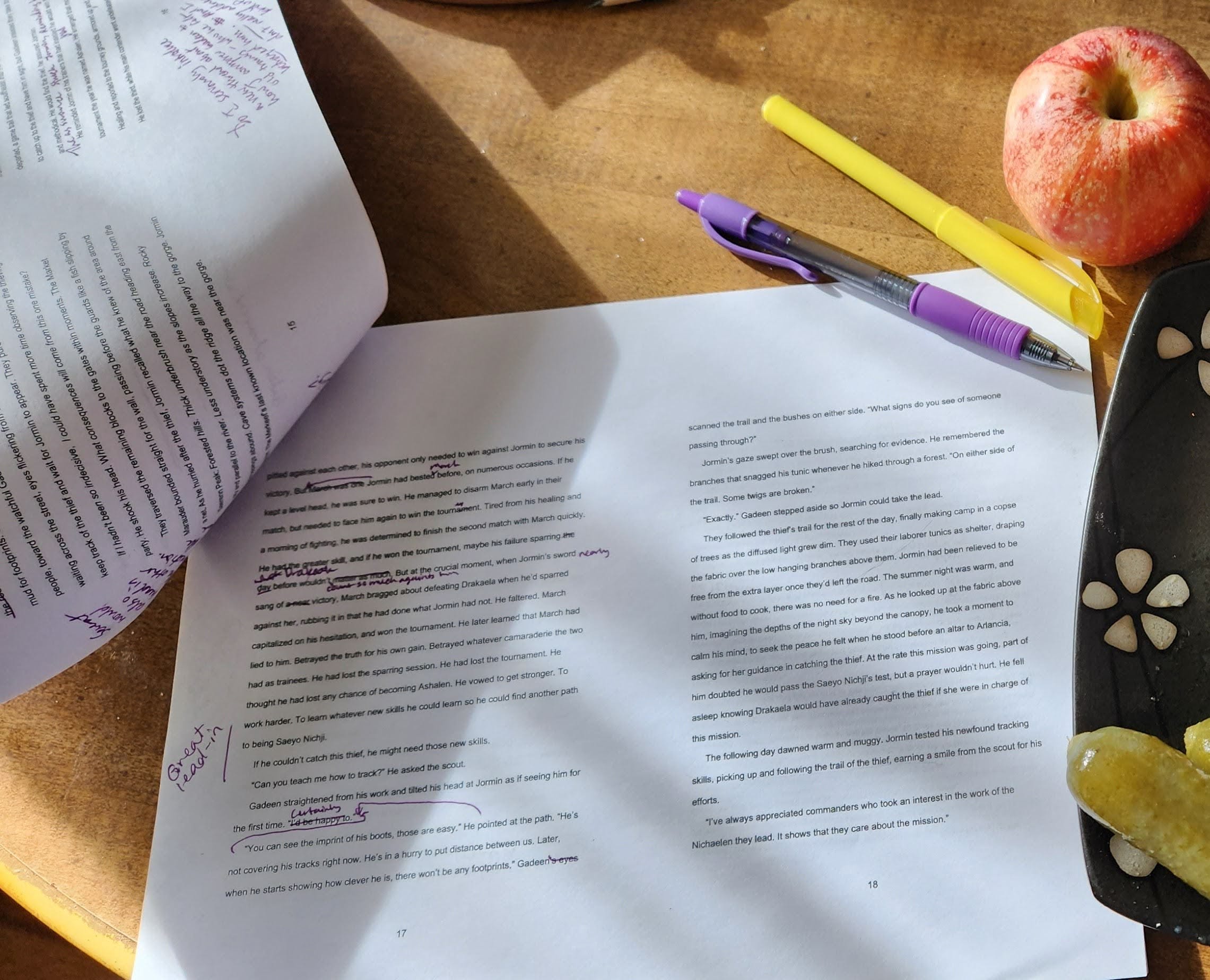
You Can’t Edit a Blank Page
This first phrase said more to me than it seems. It wasn’t just about getting words out. It was encouragement that I could always make them better. It was freeing. I could add to the story in any way I wished, and later I could go back and improve upon them. It gave me permission to be a fraud, permission to play, permission to accept the craziest imaginings and put them on the page. For me, it was hugely motivating. All I had to do was get the story out. Then I could go back, and use this magic trick called editing, and fix it. That kept the words flowing. I had permission to use my first draft to get ideas on the page. Later, I would edit.
Finish the Draft Before you Edit
My writing seems to come in layers, like that of an onion. The more I write, the more I learn about the story and the characters. It wasn’t long before I had a realization and I knew I would need to change something from the beginning of the story. This was where the second piece of advice kept my forward momentum: Don’t go back and edit. Leave a comment if you need to and continue writing the story as if you had already made the change.
Some writers struggle with this, insisting that they can’t move on while there are unresolved issues at the beginning of the book. That’s totally fine. We all have different processes. The problem comes when you have gone back to the beginning multiple times before you’ve reached the end. If you have re-started over and over and over again without ever reaching the end of your novel, I encourage you to give this method a try. Fight the urge to fix and give yourself permission to move on. Chances are, something else will come up near the ending you’ll want to change, too. Leave a comment and fix both of them in the next draft instead of starting again twice more.
I took the advice without any second thoughts, leaving a comment in my doc and pushing ahead through the novel. Again, I was free to watch the story unfold. I let go of my perfectionism and focused on finishing.
Reaching The End
Armed with these two practices, I kept writing and writing and writing. I refused to look at a blank page, I refused to go back to the beginning, I kept moving ever forward, ever onward, until I reached the final page of my first novel and wrote “the end.” It took me twenty-five years to write my first novel. The second half, the half I composed during November of 2021, took me nineteen days. What advice has aided your writing?